TechubNews Exclusive Interview with Councilor Wu: Digital Asset Regulation and the Future Potential of RWA
Techub News 

微信扫一扫
分享到朋友或朋友圈
分享到朋友或朋友圈
Source: Techub News Exclusive Interview
Content Compiled by: Peter_Techub News
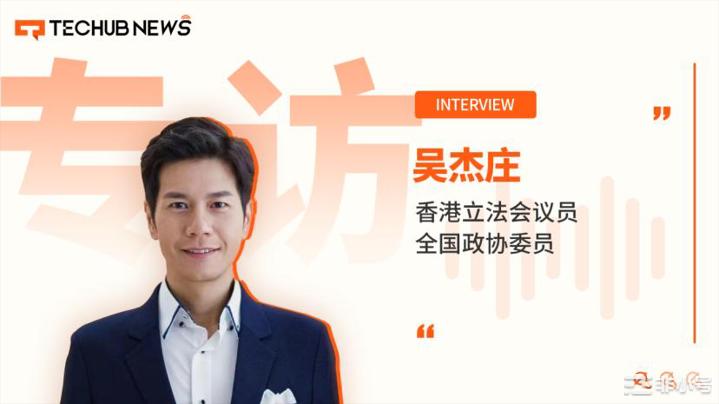
On June 25, 2025, Alma, founder of Techub News, interviewed Hong Kong Legislative Council member and National Committee of the Chinese People's Political Consultative Conference member Wu Jiezhuang to discuss the details of Hong Kong embracing Web3 and supporting digital asset development. This conversation focused on digital asset regulation, stablecoin development, RWA prospects, OTC regulation, and youth opportunities, releasing strong signals that the Hong Kong government may relax restrictions on international exchange licenses, offshore RMB stablecoins are on the horizon, RWA secondary market technological breakthroughs are imminent, OTC chaos rectification is urgent, and the TOKEN 2049 event may return to Hong Kong. Hong Kong is striving to become a global crypto hub, with the next wave of opportunities ready to launch! For more details, please read the full article.
Compliant Exchange Dilemma: High Breakthrough Costs
Alma: I noticed that Hong Kong has currently issued 11 compliant licensed exchange licenses. However, industry insiders also mentioned that Hong Kong's exchanges are facing cost pressures, even layoffs. Compliant licensed exchanges generally face high compliance costs, while revenue and profits from the market side have been unsatisfactory. How do you view the cost pressures brought by compliant exchanges and the restrictions on income such as listing tokens? As someone with a deep understanding of global markets—you are familiar with the situations in the US, EU, Middle East, and other Asia-Pacific regions—what measures do you think Hong Kong needs to take or what experiences should it learn from to break this situation?
Wu Jiezhuang: Indeed, Hong Kong's regulatory attitude towards digital assets follows the principle of "same business, same risk, same management method," which is also the basic logic of financial regulation. We need to examine the risk points of the industry, judge whether they are consistent with the risks of similar businesses, and assess whether the current quarter's regulatory details are reasonable. The Hong Kong Securities and Futures Commission's management of licensed exchanges is extremely strict, including product approval, prohibiting high-risk operations such as explicit commodities or short selling, which stabilizes the market but limits profitability.
Currently, investors are divided into ordinary retail investors and professional investors, but the choices for both are not significantly different. Professional investors have slightly more products but lack flexibility, leading to low trading volume, which in turn affects revenue growth, prioritizing compliance. However, Hong Kong residents can still trade through unlicensed overseas exchanges, creating dual pressures: unregulated overseas platforms offer diversified products, while licensed exchanges are "handcuffed," limiting competitiveness. I understand the Hong Kong government's cautious attitude because digital assets are emerging, and fraud cases like JPEX have occurred. The "A - S - P - I - Re" roadmap in February 2025 aims to enhance liquidity, proposing to increase product space for professional investors who have risk tolerance and can judge whether to invest in new products themselves. I believe the government will gradually relax restrictions, giving exchanges more autonomy, such as flexibility in staking, margin, and new product development. If none of the 11 exchanges can profit, this is clearly not the situation the Hong Kong government wants to see. Although the government cannot guarantee exchange profits, its responsibility is to maintain a healthy market. Since licenses have been issued, better development space should be provided for the industry to attract more overseas investors.
License Policy Relaxation: Welcome Top Crypto Platforms Back to Hong Kong?
Alma: Understood. Then do you think the Securities and Futures Commission can further enrich product types, especially relaxing restrictions on professional investors? Also, for exchanges like OKX, Bybit, and Binance that previously applied for Hong Kong licenses, do you think the Hong Kong government may relax policies and issue more licenses in the future?
Wu Jiezhuang: Regarding product enrichment and relaxing restrictions on professional investors, this is possible. One or two years ago, the Hong Kong government publicly stated that it did not welcome certain exchanges, causing some like OKX to leave directly. I don’t think this is the Hong Kong government’s biggest problem; some applications may not have been approved due to the institutions' own reasons, which I cannot comment on specifically. But in the "A - S - P - I - Re" roadmap, the Securities and Futures Commission clearly stated that it would attract large institutions to Hong Kong, which is a positive attitude. I also hope that some of the large platforms, such as the exchanges you mentioned, can return to Hong Kong to apply for licenses in the future.
Alma: Thank you for sharing. OSL, as Hong Kong's first licensed exchange (December 15, 2020), later received strategic investment from Bitget. Do you think this method of acquiring compliant exchanges through equity could become a way for other platforms to indirectly obtain licenses in Hong Kong?
Wu Jiezhuang: I cannot comment on specific cases. But Hong Kong's financial license management has strict requirements, whether it's the initial shareholders, management, or subsequent changes, all need approval from the Securities and Futures Commission. Licenses are not assets that can be bought and sold at will, involving comprehensive corporate strength, shareholder background, director and management suitability, financial strength, and business processes. Although changes in shareholders or directors can be made, they must be approved, unlike buying and selling fruits in a market. There are indeed licensed exchanges considering sales or integration in the market, but any changes require regulatory review. I believe that among the existing 10 licensed exchanges, some may face mergers and acquisitions, but the premise is that they must pass approval.
Stablecoin Game: Offshore RMB May Be the Trump Card
Alma: Recently, you have expressed many views in the stablecoin field, especially suggesting that Hong Kong refer to the EU's MiCA cross-border coordination mechanism. I would like to delve deeper into this topic. Currently, global stablecoin development is rapid, with the US's related bill expected to pass soon, and the EU, Middle East, and Hong Kong also accelerating progress. Hong Kong's legislative process is particularly efficient, having completed the second reading and about to pass the third reading. How do you view the development of stablecoins? There are several specific questions: first, whether offshore RMB stablecoins may be issued; second, you mentioned yesterday that sandbox (Sandbox) companies may not necessarily be linked to licenses, does this mean that the three companies in the sandbox may not necessarily obtain licenses? The Monetary Authority leader recently stated that stablecoins need to have application scenarios, otherwise they cannot even get the application form. After the new regulations take effect on August 1, will sandbox companies and new applicants form competition? In addition, the Monetary Authority also hinted that the number of licenses may be fewer than expected. What is your view on the prospects of Hong Kong's stablecoin licenses? What types of companies are most likely to obtain licenses? What is the timeline for obtaining licenses? What is the synergy between the stablecoin bill and the upcoming OTC regulation?
Wu Jiezhuang: Stablecoins have been hotly discussed recently, some even too hot. Many people see them as tools, but many companies want to issue stablecoins, thinking it's easy to make money. Every day I receive various corporate inquiries, including cross-border or institutions without product services, all wanting to apply for licenses. People often see the profits of the world's two largest stablecoins (such as USDT, USDC), but ignore their growth process in an unregulated environment. They profit from low-risk investments of user funds, but replicating this model under a compliance framework is extremely difficult now.
The Monetary Authority emphasizes that stablecoins need user scenarios, but more critical is ecosystem construction. Stablecoin transactions involve party A and party B, especially in cross-border scenarios. Why would partners choose your stablecoin? If used internally by companies, such as Tencent's Q coins or Macau casino chips, it's feasible, but promoting them to countries like South America involves ecosystem issues. At the regulatory level, the law does not specify in detail, only requiring companies to have suitable personnel, integrity records, registered capital, and other basic conditions. Success depends on market performance. I agree with the Monetary Authority's President Yu Weiwen's view, hoping the market does not become too hot, avoiding excessive expectations affecting the industry's healthy development. Stablecoins are an important part of financial infrastructure, but not all companies can succeed. I personally prefer "let a hundred flowers bloom," because it's impossible to predict which type of company will succeed—financial companies, internet companies, or other types? The current two largest stablecoin issuers are not traditional financial institutions or internet giants, and their success is inseparable from the ecosystem. For example, USDC's synergistic relationship with Coinbase shows that original ecosystem Crypto may be the key to stablecoin success.
The first stablecoin was born in 2015, stemming from the rigid demand for inconvenient traditional financial Bitcoin transactions. Now, its reserve and payment functions are gradually emerging. I hope Hong Kong's stablecoin bill and licenses can facilitate global circulation, increasing the $250 billion market share, currently almost entirely dominated by the US dollar, with other currencies like the Hong Kong dollar accounting for very little. The offshore RMB stablecoin issue is complex. I will publicly question the government at the Legislative Council on July 2, and the specific reply is not yet clear, but I am optimistic about it. At the Lujiazui Forum last week, President Pan Gongsheng mentioned the potential of digital central bank currency and stablecoins in cross-border payments. Hong Kong, as an international financial center and an important special zone for RMB internationalization, should promote the diversification of related products, such as RMB counter stocks, fixed-income products, etc., to create demand and improve the ecosystem.
RWA May Open Secondary Market Trading
Alma: You mentioned earlier that high-quality assets from the mainland can come to Hong Kong for financing, and stablecoins are similar to RWA asset trends. The Hong Kong government has increased investment in the RWA field in recent years. With the popularity of stablecoins, RWA has also become extremely hot. How do you view the challenges and opportunities RWA faces in Hong Kong? Can you combine specific cases, such as Langxing (Ant)'s energy project—it is an analog asset but achieved through overseas financing—to talk about your views on the development prospects of RWA in Hong Kong?
Wu Jiezhuang: Challenges exist, but opportunities outweigh challenges. The opportunity lies in the fact that assets with insufficient liquidity in the past, such as real estate, real estate bonds, securities, and new assets like Langxin Energy projects, can achieve global liquidity through RWA. Previously limited to local investment, they can now be listed compliantly on exchanges in other countries, traded 7×24 hours, with more reasonable value. There are many challenges. The Monetary Authority and Securities and Futures Commission test risks through sandboxes, assess legal conflicts and areas needing improvement, which takes time to verify. The market outlook is optimistic. RWA is the best combination point of digital assets and the real economy, with vision. However, there are no completely successful cases yet, such as being limited to the primary market, with the secondary market not yet open.
Alma: Thank you for sharing. As someone close to policy, when do you think the RWA secondary market can be realized?
Wu Jiezhuang: The RWA secondary market is a market behavior, the key lies in the value of the underlying assets. If the market believes the assets have potential for rise and fall, trading will occur; if price fluctuations are low, trading volume may be small, similar to the bond market rather than frequent trading like stocks or Bitcoin. The core of the issue is not the method itself; the method and market coverage are very clear. The core advantage of RWA is turning originally illiquid assets into liquid ones, for example, expanding from serving 1 billion people to 5 billion people, which is a significant technological breakthrough and innovation, providing new possibilities for the market.
Hong Kong's OTC Regulatory Policy Has a Greater Chance of Landing This Year
Alma: I have carefully observed the current situation of OTC (over-the-counter) regulation, which has always been your focus. In the Hong Kong market, OTC has become the most profitable business, and even compliant licensed exchanges have entered this field. Some time ago, we interviewed Victory Securities, whose transaction volume exceeded 10 billion by the end of March. Can you share the latest progress and future plans for OTC regulation?
Wu Jiezhuang: There will be new developments in OTC regulation, with the second round of consultation expected to be released by the end of June. The market has previously conducted a round of consultation, and the government may have new considerations. The second round will start next week, and regulatory departments will also quickly take action to strengthen OTC regulation. There are indeed many chaotic phenomena in the market now, as I mentioned before. Many street exchange shops have appeared in areas like Hong Kong's Admiralty, most of which are unlicensed and unregulated OTC businesses that anyone can open. Some exchange shops operate legitimately, with no problems in the exchange process, but many are related to black or gray industries. News often reports people carrying cash for exchange but being refused payment, even driven away or beaten, which is not uncommon and worrying.
This chaos not only affects industry health but also threatens Hong Kong's financial stability, which is clearly not ideal. Therefore, I hope the management measures are introduced as soon as possible. The Hong Kong government is very cautious in legislation, fully assessing market demand and pros and cons, rather than making hasty decisions. Good policies will be implemented stably after introduction; if not perfect, legislation will be temporarily avoided to prevent citizens from being harmed due to regulatory gaps. We need to find a balance between the two. OTC regulation is expected to land this year, and I am optimistic about it, with a greater chance.
Hong Kong's Competitive Advantages in Stablecoins, RWA, and OTC Fields
Alma: You are involved in policy formulation and communicate closely with the industry. How do you evaluate Hong Kong's advantages in stablecoins, RWA, and OTC fields? Singapore will clear out some institutions by the end of June. Under changing global political situations, what are Hong Kong's opportunities? Are industry professionals accelerating their move to Hong Kong?
Wu Jiezhuang: Indeed, more and more industry professionals have come to Hong Kong in recent years, exceptionally lively compared to two or three years ago, not limited to mainland Chinese but also including people from the US and other places. For example, both Consensus and Bitcoin Forum events were held in Hong Kong. The Consensus event in February was extremely successful and will be upgraded to the largest venue at the Convention and Exhibition Center next February, combined with AI; Bitcoin Asia will also be held again in August. These events attract international participants, highlighting Hong Kong's potential as an Asian hub.
The US, as the world's largest economy, and Hong Kong, as a special administrative region of China with important financial status, it is feasible to strive to be the leader in Asia. After digital asset licenses are implemented, Hong Kong may usher in a new wave of leaps. Traditional finance has seen improvements, with over 100 companies queuing for listing on the Hong Kong stock market. Virtual markets and new finance will complement each other. For example, after Circle's listing in the US, many Crypto companies are considering listing in the US, with traditional financial resources injecting new momentum into the industry. Hong Kong may replicate this trend, with signs of shell integration already appearing in companies like OSL and Guoya Interactive, possibly forming a scale effect in the future. The market value of the three major US Crypto companies is nearly $200 billion, and the Hong Kong market still has huge growth space. If you believe China's economy will align with the US, the potential in this field should not be underestimated.
Safe Strategies for Ordinary People to Hold Bitcoin
Alma: Recently, industry friends have started collecting shells in Hong Kong, replicating the early speculative listing model. How do you think ordinary people can safely hold Bitcoin?
Wu Jiezhuang: I have been buying spot directly since 2017, storing it in cold and hot wallets, relatively professionally. But ordinary people need to be aware of the risk of losing private keys, with no one to help. It is recommended to open accounts through ETFs or licensed exchanges with insurance guarantees, which is simpler to operate.
Youth Participation in Web3 Industry Opportunities and Education Planning
Alma: You were the chairman of the Hong Kong Youth Association, focusing on youth growth. As a representative of self-made success, facing opportunities like Web3, how do you think more Hong Kong youth can join the industry? What are the plans for employment, entrepreneurship, or investor education?
Wu Jiezhuang: It's divided into two aspects. First, investment education needs to be strengthened. The government should increase efforts because the industry is new, and some citizens mistakenly regard stablecoins as investment tools. It is necessary to popularize their tool attributes rather than profit means. Promote knowledge such as trading with licensed institutions and product logic. The industry also needs to carry out anti-fraud education, and community activities can help popularize it. Second, youth opportunities are the focus of my election platform, hoping to break the dilemma of small development space. The current Legislative Council term is about to end. I hope to promote youth participation in the Web3 industry, but currently, local youth participation is insufficient, with outsiders dominating. To this end, we cooperate with universities to carry out summer internships, exchange classes, and training classes to let youth understand the essence of the industry. Whether technical or non-technical positions, such as programming, blockchain development, insurance, product design, risk management, or market planning, there is demand. Hong Kong's finance, law, low tax rates, and convenient living make it the best platform. I am committed to creating opportunities, such as the Consensus event attracting over 200 companies to participate.
TOKEN 2049 May Return to Hong Kong Next Year
Alma: You promoted Bitcoin Asia and Consensus to come to Hong Kong. Regarding the impact of Singapore's TOKEN 2049 event being cleared out, the industry is worried whether they will still go to Singapore this year and whether it will move to Hong Kong in the future? Will other 2049 events come to Hong Kong? Have you communicated with the organizers?
Wu Jiezhuang: TOKEN 2049 was originally held in Hong Kong but moved to Singapore due to the pandemic. This year is the third year, and it may return next year. Hong Kong is an open market, welcoming all parties to participate, not competing with others for profit. I have friends contacting the organizers, and progress remains to be seen.
Summary
This exclusive interview showcased Hong Kong's ambitions and strategic layout in the digital asset field. Legislative Council member Wu Jiezhuang, with insight into global trends, proposed policy suggestions such as relaxing licenses, promoting offshore RMB stablecoins, and RWA development, injecting new vitality into Hong Kong's crypto industry. At the same time, the imminent landing of OTC regulation, increased youth education planning, and the possible return of TOKEN 2049 all mark Hong Kong's accelerated move towards global Web3 leadership. Techub News will continue to track the Legislative Council's questioning on July 2 and subsequent developments, bringing readers the latest insights.