Base Conference Express: From Superchain to Super App


分享到朋友或朋友圈
At 6 AM on July 17, Base held its long-awaited launch event.
The updates about the Base chain itself were not complicated. The chain's performance improved by 10 times, and the Logo changed from a circle to a square. What really deserves attention is the update of Coinbase Wallet to The Base App, a new entry product with high expectations.
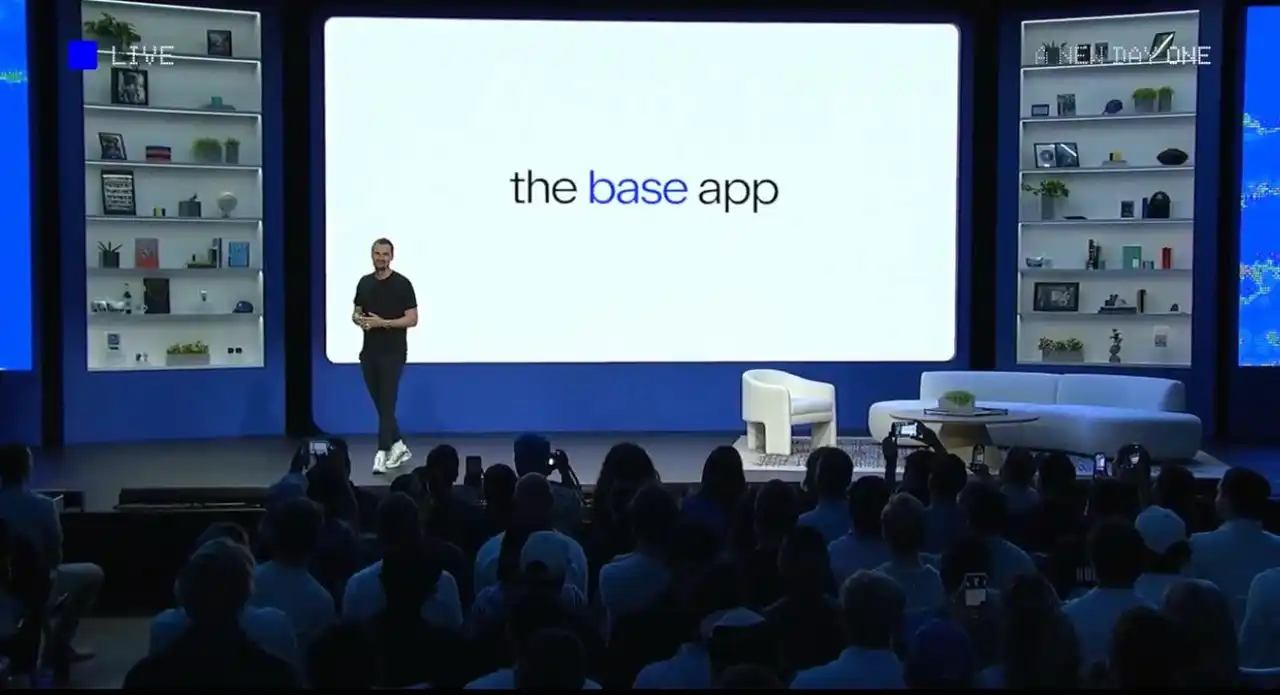
This means Base is no longer satisfied with being just a "useful chain". It has started to build its own traffic entry and actively participate in the construction of user paths. Holding both the underlying technology and the entry points in its own hands is something very few L2 projects can achieve at this stage.
From Superchain to Super App
Base has always emphasized that it is part of the Superchain, a reusable, scalable, and composable general-purpose L2. But whether in terms of technical route or ecological strategy, Base is clearly moving away from being a pure infrastructure role to becoming a platform operator.
The Base App is the result of this transformation. It is no longer a "wallet" tool in the traditional sense but attempts to integrate modules such as on-chain identity, trading, social, payment, and AI Agent to form a unified entry. Its design philosophy is closer to integrated products like WeChat and Telegram, rather than asset management tools like MetaMask or Rainbow.
In other words, Base not only wants to be a place where applications can be deployed but also hopes to become the interface users see when they first enter Web3.
This strategic change represents the boundary between "building infrastructure" and "creating user products" is converging. BlockBeats previously obtained the beta testing qualification for this App. For a review article, please refer to: "One Step Ahead of Twitter, the New Coinbase Wallet Evolves into WeChat"
Why Build the Entry Yourself?
The reason Base launched The Base App is not because of any major bottlenecks in the chain itself, but because the entire L2 market has entered a stage of homogenization.
Performance is no longer the only indicator of competitiveness, as most projects have sufficient throughput capabilities. Instead, who can handle the traffic and who can build a complete user path has become the key to differentiation.
Web3 has always lacked a default entry, with various components trying to independently complete onboarding, but the actual effect is not ideal.
In this context, Base's choice to build its own entry has its practical considerations:
Coinbase itself has a C-end foundation, with capabilities in compliance, payment, fiat entry, etc., making it one of the institutions closest to an "application distribution platform";
Rather than waiting for developers to spontaneously build, it's better to first establish a reference paradigm to form a closed loop of product power;
Compared to using subsidies and airdrops to attract traffic, creating a high-frequency entry has more long-term user value.
For any chain that wants to build an ecosystem, not controlling the entry means giving up the initiative. Base's choice to build its own entry can be understood as a more long-term-oriented decision at this stage.
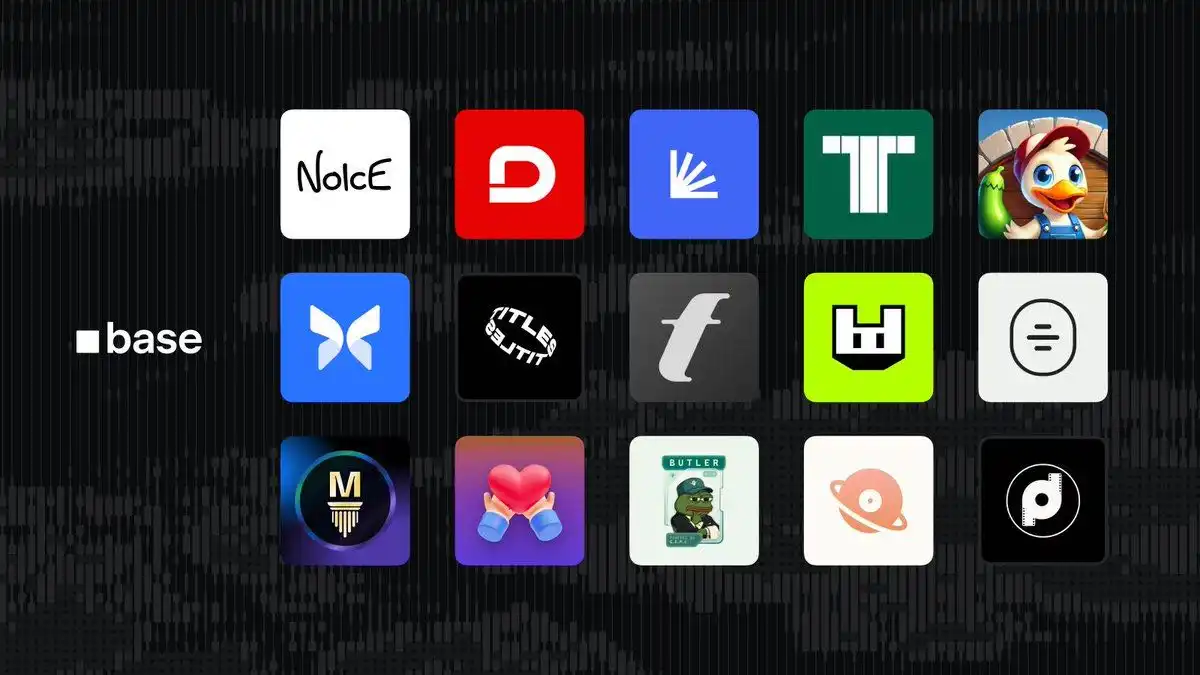
A Use Case Worth Watching: Integration of AI Agent and Social Features
Although the main update of The Base App did not particularly emphasize AI capabilities, when introducing the social module and mini app architecture, it mentioned a noteworthy feature integration: calling on-chain assets through AI Agent in chat scenarios.
In the demo, users can directly input natural language in the chat box, such as "AA the money from last week's trip," and the AI Agent can recognize the conversation partner, calculate the amount due, and automatically call the wallet to complete the payment. The entire process does not require interface jumps or rely on external dApps.

From an experience perspective, this is a compression of the on-chain operation path; from a technical architecture perspective, it is a deep integration of self-custody wallets and natural language systems. Its feasibility depends on three conditions being met simultaneously:
User assets are self-custodied and can authorize the Agent to execute;
The chat and asset modules are connected, with a unified account system;
The Agent can understand natural language semantics and map them to on-chain operations.
This type of functionality is not appearing for the first time. Previously, some projects attempted to combine AI Agent with on-chain transactions, but most focused on directions like trading, market analysis, and investment research assistance, with scenarios biased towards high-frequency operations by individual investors. In contrast, The Base App embeds it in the social module, closer to financial collaboration under real social relationships and more aligned with daily needs.
Although this path is still in its early stages, it does demonstrate a possibility: Web3's interaction methods are shifting from "click operations" to "natural language instructions."
Technologies like Account Abstraction and MPC wallets optimize execution efficiency; design attempts like The Base App are closer to a reconstruction of the usage path itself, targeting the cognitive threshold.
The smooth Web2-like experience that users can feel in Base App for the above AI or various on-chain functions will be attributed to the innovation of the underlying architecture. The official launch of FlashBlock, Base officially collaborated with Flashbots in February to build the development module Flashblocks, which has been launched on the testnet, and Jesse announced that the module officially went live on the mainnet two hours before the launch event.
Developers can integrate through RPC interfaces or WebSocket that support Flashblocks, with the former recommended for a more stable fallback mechanism. Flashblocks adopts a time-ordered transaction mechanism, avoiding the traditional "high-price transaction cutting in line" phenomenon, and sets a segmented packaging strategy for high Gas limit transactions to ensure fair allocation of block resources. Flashblocks can theoretically reduce the effective block time from 2 seconds to 200 milliseconds, making today's Base 10 times faster than yesterday's Base and 2 times faster than Solana. For most Web2 applications, the standard for "smooth experience" is to complete interaction feedback within 100~300 milliseconds, and this standard has clearly been met.

The Battle for Web3's Entry is Reopening
Base is obviously not the only one wanting to build an entry. But so far, these entries either lack a traffic foundation, have incomplete scenario construction, or lack execution capabilities. Base has a key variable: Coinbase.
Coinbase, on one hand, has a traffic foundation of nearly 100 million users, and on the other hand, can provide a complete closed loop for Base App through the integration of fiat entry and on-chain accounts—technology, users, payment, trading, and fund transfers are all connected.
The essence of the battle for entry is the competition for scenario dominance. Whoever can define how users open Web3 every day has the qualification to reconstruct the industry order.
In the current lack of new narratives in Web3, the shift in product form may be the new narrative itself.
Base's launch event was not complicated, but it sent a clear signal: the competition among public chains is transitioning from "chain capabilities" to "entry capabilities."
Base took the initiative to build a complete closed loop from App to chain, not for temporary traffic, but for long-term user path dominance.
It may not immediately become the "WeChat of Web3," and in the short term, it may not necessarily change user habits. But it at least shows us: between infrastructure and user products, there are still many blank areas that can be filled.
When "who owns the entry" becomes the new consensus starting point, the competition among public chains will also enter a new stage.
Original link